
Co-authored by Lee Dehihns and Jack Cox

It is no secret that ESG has been a substantial investing theme in recent years. There continues to be added pressure for increased ESG disclosure and ESG standards development. This year, the International Organization of Security Commissions (IOSCO) has outlined the importance of added ESG disclosure. However, one SEC commissioner, Hester Peirce harshly criticized IOSCO’s call to institutional investors to disclose their ESG factors in a recent speech she gave in Washington, D.C.
Who is IOSCO? They are an international body that consists of organizations that regulate securities and futures markets. In fact, IOSCO is recognized as the global standard setter for the securities sector. Whenever IOSCO releases a statement on disclosure, it should be deemed to be significant; moreover, IOSCO never intends to repudiate existing laws or regulations. Their three securities objectives are: to protect investors, to ensure that markets are fair, efficient and transparent, and to reduce systemic risk.[1]
In January, IOSCO published a statement that set out the importance for issuers to consider including Environmental, Social, and Governance factors when disclosing information. Examples of ESG matters could include environmental factors related to sustainability and climate change, social factors about labor practices and diversity, as well as general governance-related factors. This added disclosure, according to IOSCO, is material and holds an impact in investment and voting decisions. Furthermore, ESG matters can represent substantial risks and opportunities to an issuer.[2]
Before moving forward, it is critical to understand the definition of materiality. Under case law, its definition is that there must be “a substantial likelihood that the disclosure of the omitted fact would have been viewed by the reasonable investor as having significantly altered the ‘total mix’ of information made available.”[3] In short, for information to be material, it must be useful and informative, and be information that a reasonable investor would like to see.
Disclosure practices vary from issuers, from company to company, and from industry to industry. In other words, specific ESG disclosure may have a more material impact for some issuers than others. Some frameworks that have been developed have come from the Carbon Disclosure Project (CDP), the Global Reporting Initiative (CRI), Integrated Reporting (IR), and the Sustainability Accounting Standards Board (SASB).
With increased international calls for corporations to disclose how investments can impact socioeconomic issues, the SEC’s Hester Peirce states that there is no political will within The United States to incorporate ESG criteria into corporate disclosures. She remarks, “I do not speak for the commission or for my fellow commissioners, but I found the statement to be an objectionable attempt to focus issuers on a favored subset of matters, as defined by private creators of ESG metrics, rather than more generally on material matters.” She argues further and says that ESG criteria is immaterial and that existing fundamental disclosure should be the focus of both issuers and regulators and that it could distract the regulated community from existing federal mandates. She explains, “Issuers already spend considerable amounts of money complying with existing disclosure requirements. Requiring disclosures aimed at items identified by organizations that are not accountable to investors unproductively distracts issuers.”[4] Peirce elaborates that the SEC would be required to define ESG factors as well as possibly enforce existing regulation and procedures in order to ensure that disclosed ESG criteria is honest and accurate.
Hester Peirce should reevaluate her comments on IOSCO’s statement. ESG disclosure adds value and the opportunity to further evaluate sustainability whether it be narrow in scope at the entity level, or broader in scope at an industry level. ESG disclosure has a positive and a material impact from the perspective of both issuers and investors. In Part 2 of this piece, we will look into some evidence to support this theory.
[1] “About IOSCO.” IOSCO, 2019, www.iosco.org/about/?subsection=about_iosco.
[2] STATEMENT ON DISCLOSURE OF ESG MATTERS BY ISSUERS. IOSCO, 18 Jan. 2019.
[3] Deane, Stephen. “The Rulemaking Process: Two Accounting and Auditing Mini-Case Studies.” SEC Emblem, U.S. Securities and Exchange Commission, 22 Aug. 2017, www.sec.gov/news/speech/deane-speech-rulemaking-process
[4] Noon, Alison. “SEC’s Peirce Bucks Call For Corporate Responsibility Rules.” Law360, LexisNexis, 6 Mar. 2019, www.law360.com/articles/1135612/sec-s-peirce-bucks-call-for-corporate-responsibility-rules.
Opinions expressed in the blog are those of the authors, and do not reflect the positions of SILC or of any other party.
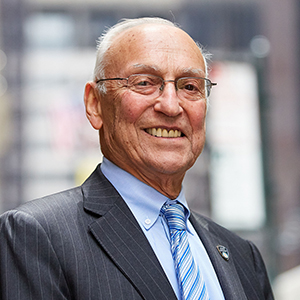 Stanley Goldstein, one of the founders of the Sustainability Investment Leadership Council, launched the accounting firm Goldstein Golub & Kessler (now part of RSM). After the firm was bought, Stanley became a private equity investor and is now the Chairman of Knickerbocker Financial Group. Mr. Goldstein has served on numerous corporate boards and is the founder of American Friends of James Joyce, The New York Hedge Alternative Investment Roundtable and Donors' Forum (a philanthropic roundtable).
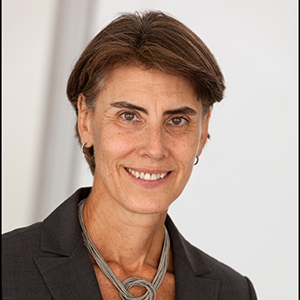 Rebecca Craft
 Andrea Schmitz
 Nidhi Chadda
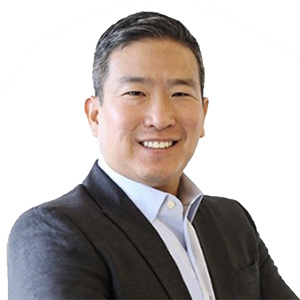 Jeffrey Yin currently serves as the Chief Financial Officer and General Counsel of Artsy (
 Sarah Tomolonius is the Vice President of Investor Relations at M13, a consumer tech-focused full-service venture capital engine. Ms. Tomolonius is the co-founder of the Sustainability Investment Leadership Council. Ms. Tomolonius served as Vice President, Marketing and Investor Relations for Arlon Group, a food and agriculture investment firm, from December 2012 to June 2018, and served as Senior Professional, Management Reporting & Analytics from December 2010 to December 2012. From October 2008 to December 2010, Ms. Tomolonius served as Associate, Investor Relations for Citi Private Equity, a private equity group that was acquired by StepStone Group in October 2010. From October 2005 to September 2007, Ms. Tomolonius served as Research Analyst, Corporate & Public Affairs Group of Edelman, a global public relations firm. Ms. Tomolonius served as Program Assistant, Water & Coastal Program of Natural Resources Defense Council, a non-profit international environmental advocacy group, from October 2002 to September 2005. Ms. Tomolonius has served as a Director on the Board of Quest Resource Holding Corp. (NASDAQ: QRHC) since 2016 and is a member of the Audit and Nominations & Governance Committees. Ms. Tomolonius also served in numerous board capacities for non-profit organizations, including Chair of the Sustainability Committee for the New York Alternative Investment Roundtable and President of the Board of HeARTs Speak, a nonprofit organization, from February 2014 to February 2017, and she remains a board member for the organization.
 Mohita Sinha serves as the Co-Chair of SILC’s Education Committee. With extensive experience leading complex finance and risk regulatory reporting transformations at global financial institutions, Mohita helps organizations evolve from voluntary action to regulatory compliance to true value creation. Her current focus is on climate risk integration, guiding companies to understand, operationalize, and embed risk considerations into business strategy while meeting compliance requirements.
 Jessica Moon, Education Co-Chair, is a strategic leader at the Sustainable Investment Leadership Council (SILC), where she champions the integration of sustainability into core business and investment strategies. She designs and leads convenings that unite leading cross-sector professionals in critical dialogues focused on unlocking sustainable financial returns through innovative solutions. With over two decades of experience, Jessica brings a unique perspective, combining her legal acumen with deep sustainability expertise and a holistic understanding of the interconnectedness of business functions. Her leadership at Scholastic Inc., where she pioneered their ESG & Sustainability function, demonstrates her ability to develop and implement strategies that drive both environmental and financial value. Jessica empowers leaders to see sustainability as a key driver of strategic advantage and long-term financial success, fostering a future where impact and returns are intrinsically linked.
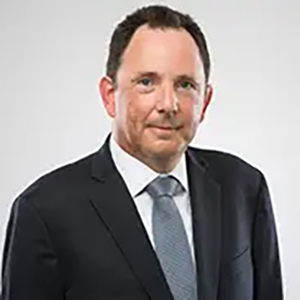 Dr. Michael Kraten is an executive management consultant and business educator. He maintains specialties in entrepreneurship, business modeling, decision analysis, sustainability and resilience, educational gaming, strategic planning, valuation, risk management, and forensic analysis.
 Sophia Shahabadi
 As a Managing Director at Silver Leaf Partners and sustainable finance subject matter expert, Marc Tannous established the Sustainable Finance Practice as a service organization to represent managers and companies seeking alpha by scaling sustainability / impact solutions. The Practice provides capital introduction, customer referral, and advisory consulting.
  Sydney Improta
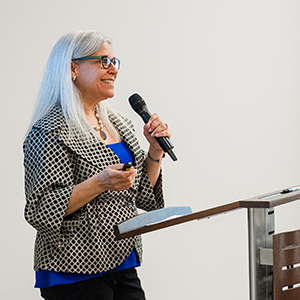 As a coach, facilitator and consultant, Deborah Goldstein works with NY, U.S. and international organizations and individuals who are motivated to thrive in the 21stcentury workplace environment.
 Jason Dodier is an American international business professional at Schneider Electric, which is the global specialist in energy management. Since commencing his career with Schneider Electric, Jason has lived in the United States, Middle East and Europe, while performing a variety of functions on behalf of the company in operations, business development, marketing and sales management. Jason is currently a Corporate Ambassador for electrical distribution, communications technology, sustainability, and innovation, activity on social media and delivering speeches on these topics worldwide.
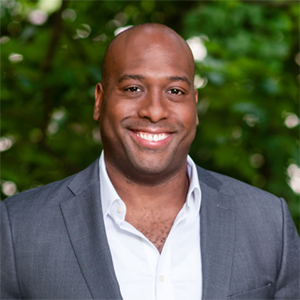 Fitzgerald Angrand is a transactional attorney specializing in debt finance and alternative investments in the cannabis industry, representing investors, private equity funds, private debt funds, family offices, distressed debt funds, lenders and operating companies.
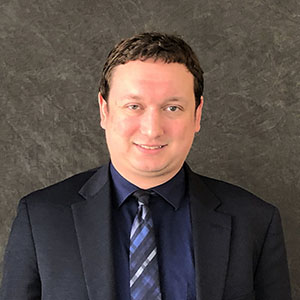 Matthew Levy is a Manager with PKF O’Connor Davies in the Not-for-Profit Services Group. He is a CPA and has been with PKFOD since 2012. He graduated from Lehigh University with a Bachelor of Science in Accounting. He currently serves as the treasurer of the Sustainability Investment Leadership Council.
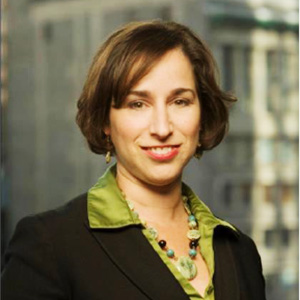 Heather Loebner leads Sustainability and ESG strategy at CircleIT, a B Corporation in the IT Asset Disposition (ITAD) industry. Sustainability plays a critical role at CircleIT, focused on repurposing IT devices at end-of-life and eliminating e-waste aligned with a circular economy model. Loebner leads an internal and client-facing ESG strategy that increases transparency, establishes a path to carbon neutrality and net zero, and builds social and environmental impact through strong governance aligned with B Corporate values and certification.
 J. Michael Kirkland, CPA, CGMA is a veteran financial executive with over 30 years of experience in accounting, industry, consulting, and business development. He also serves the CPA profession with distinction, lending strong and visible leadership to professional and student groups.