
Co-authored by Lee Dehihns and Jack Cox

Welcome back. In our most recent post, we looked into Hester Peirce’s recent comments about IOSCO’s call to action for more ESG reporting. This ‘Part 2’ blog will dive deep into some evidence about this topic.
A study from Sustainalytics took a sample of 231 M&As; within that sample “ESG compatible deals” outperformed “ESG incompatible deals” by an average of 21% on a five-year cumulative return basis. This suggests that ESG compatibility may have a positive contribution to the overall financial success of M&A deals. This information can be incredibly useful for investment banks that are supporting M&A deals. It is possible that ESG factors can be used to weigh risk in M&A deals moving forward. The cumulative returns of the study suggest that returns in ESG compatible deals could outweigh returns from ESG incompatible if a longer amount of time has elapsed since the original deal.[1]
A collaborative survey from Principles for Responsible Investment (PRI) and PricewaterhouseCoopers (PWC) suggests that strong ESG factors can increase the likelihood of an M&A deal getting done. Furthermore, poor performance on ESG factors can impact the valuation of an M&A deal, whereas strong performance on ESG factors does not usually facilitate a premium for valuation. PWC believes based on their survey that ESG due diligence will continue to develop in scope and in importance. This can be illustrated by the fact that 63% of surveyed companies think that there has been a large increase in the influence of ESG factors in transactions in the last three years, and that 75% of surveyed companies believe that there will be an immense increase in the influence of ESG factors over the next three years.[2] This information is relevant as it shows an increased need for due diligence in order to quantify the financial performance of ESG factors.
ESG factors could be relevant in brokerage activities. A report from J.P. Morgan took a quantitative approach to see if ESG can enhance an investment portfolio. There takeaway was that present ESG factors in a portfolio can reduce volatility, increase Sharpe ratios, and prevent large losses during times of market stress. This was concluded from various regression analyses comparing ESG indices to regional MSCI indices around the world. In fact, J.P. Morgan ran regressions with ESG combinations from ACWI (quality, dividend yield, PMOM, and low volatility); the results were excess returns of 1.7%-3.4% from the years 2007-2016.[3] This could be incredibly useful information for custodians and brokerage firms offering products, particularly to institutional investors.
Barclays investigated the impact of ESG factors on bond performance. Barclays gathered data from both Sustainalytics and MSCI. High-ESG portfolios have outperformed low-ESG portfolios on average by 0.29% per year and by 0.42% per year over the past seven year for Sustainalytics and for MSCI respectively. Positive governance factors had the greatest impact on returns from both Sustainalytics and MSCI. Although, ESG score providers may use different methodologies, this data suggests that management quality and a long horizon can benefit bondholders.[4]
Besides being informative in the investment decision-making process, some ESG criteria and related risks could have a material impact elsewhere and should be disclosed. For example, picture a retail filer that has a single supplier that supplies all the inventory for said retailer’s stores. Imagine if that supplier is subject to a worker health and safety issue at its only factory in Bangladesh (for example, explosions or a building collapse), or if there were a substantial cost increase in shipping due to compliance with greenhouse gas regulations or severe delays from extreme weather. These are specific ESG criteria/risks that should be disclosed, and are more than just “nice to have.”
In short, ESG criteria is incredibly relevant. Both issuers and investors can get a better grip for their financial making decisions with this information. It appears that Hester Peirce does not understand the current landscape of ESG reporting criteria; she should not shy away from IOSCO’s suggestions.
Thank you for reading! Moving forward, we will have some posts on specific deals that have been impacted by ESG factors.
[1] “ESG Compatibility: a Hidden Success Factor in M&A Transactions.” Sustainalytics, 29 June 2017,
[2] “The Integration of Environmental, Social and Governance Issues in Mergers and Acquisitions Transactions.” PWC, PRI, www.pwc.com/gx/en/sustainability/publications/assets/pwc-the-integration-of-environmental-social-and-governance-issues-in-mergers-and-acquisitions-transactions
[3] ESG – Environmental, Social & Governance Investing. J.P. Morgan, 14 Dec. 2016, yoursri.com/media-new/download/jpm-esg-how-esg-can-enhance-your-portfolio
[4] “The Positive Impact of ESG Investing on Bond Performance.” Barclays Investment Bank, 31 Oct. 2016, www.investmentbank.barclays.com/our-insights/esg-sustainable-investing-and-bond-returns.html?trid=%5B%25tp_AdID%25%5D&cid=disp_sc01e00v00m04GLpa11pv29#tab3
 Stanley Goldstein, one of the founders of the Sustainability Investment Leadership Council, launched the accounting firm Goldstein Golub & Kessler (now part of RSM). After the firm was bought, Stanley became a private equity investor and is now the Chairman of Knickerbocker Financial Group. Mr. Goldstein has served on numerous corporate boards and is the founder of American Friends of James Joyce, The New York Hedge Alternative Investment Roundtable and Donors' Forum (a philanthropic roundtable).
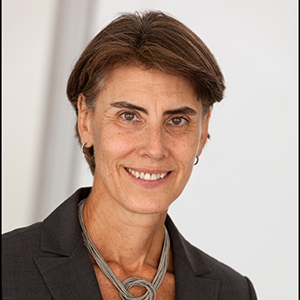 Rebecca Craft
 Andrea Schmitz
 Nidhi Chadda
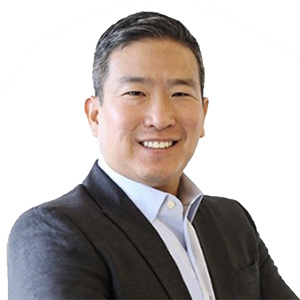 Jeffrey Yin currently serves as the Chief Financial Officer and General Counsel of Artsy (
 Sarah Tomolonius is the Vice President of Investor Relations at M13, a consumer tech-focused full-service venture capital engine. Ms. Tomolonius is the co-founder of the Sustainability Investment Leadership Council. Ms. Tomolonius served as Vice President, Marketing and Investor Relations for Arlon Group, a food and agriculture investment firm, from December 2012 to June 2018, and served as Senior Professional, Management Reporting & Analytics from December 2010 to December 2012. From October 2008 to December 2010, Ms. Tomolonius served as Associate, Investor Relations for Citi Private Equity, a private equity group that was acquired by StepStone Group in October 2010. From October 2005 to September 2007, Ms. Tomolonius served as Research Analyst, Corporate & Public Affairs Group of Edelman, a global public relations firm. Ms. Tomolonius served as Program Assistant, Water & Coastal Program of Natural Resources Defense Council, a non-profit international environmental advocacy group, from October 2002 to September 2005. Ms. Tomolonius has served as a Director on the Board of Quest Resource Holding Corp. (NASDAQ: QRHC) since 2016 and is a member of the Audit and Nominations & Governance Committees. Ms. Tomolonius also served in numerous board capacities for non-profit organizations, including Chair of the Sustainability Committee for the New York Alternative Investment Roundtable and President of the Board of HeARTs Speak, a nonprofit organization, from February 2014 to February 2017, and she remains a board member for the organization.
 Mohita Sinha serves as the Co-Chair of SILC’s Education Committee. With extensive experience leading complex finance and risk regulatory reporting transformations at global financial institutions, Mohita helps organizations evolve from voluntary action to regulatory compliance to true value creation. Her current focus is on climate risk integration, guiding companies to understand, operationalize, and embed risk considerations into business strategy while meeting compliance requirements.
 Jessica Moon, Education Co-Chair, is a strategic leader at the Sustainable Investment Leadership Council (SILC), where she champions the integration of sustainability into core business and investment strategies. She designs and leads convenings that unite leading cross-sector professionals in critical dialogues focused on unlocking sustainable financial returns through innovative solutions. With over two decades of experience, Jessica brings a unique perspective, combining her legal acumen with deep sustainability expertise and a holistic understanding of the interconnectedness of business functions. Her leadership at Scholastic Inc., where she pioneered their ESG & Sustainability function, demonstrates her ability to develop and implement strategies that drive both environmental and financial value. Jessica empowers leaders to see sustainability as a key driver of strategic advantage and long-term financial success, fostering a future where impact and returns are intrinsically linked.
 Dr. Michael Kraten is an executive management consultant and business educator. He maintains specialties in entrepreneurship, business modeling, decision analysis, sustainability and resilience, educational gaming, strategic planning, valuation, risk management, and forensic analysis.
 Sophia Shahabadi
 As a Managing Director at Silver Leaf Partners and sustainable finance subject matter expert, Marc Tannous established the Sustainable Finance Practice as a service organization to represent managers and companies seeking alpha by scaling sustainability / impact solutions. The Practice provides capital introduction, customer referral, and advisory consulting.
  Sydney Improta
 As a coach, facilitator and consultant, Deborah Goldstein works with NY, U.S. and international organizations and individuals who are motivated to thrive in the 21stcentury workplace environment.
 Jason Dodier is an American international business professional at Schneider Electric, which is the global specialist in energy management. Since commencing his career with Schneider Electric, Jason has lived in the United States, Middle East and Europe, while performing a variety of functions on behalf of the company in operations, business development, marketing and sales management. Jason is currently a Corporate Ambassador for electrical distribution, communications technology, sustainability, and innovation, activity on social media and delivering speeches on these topics worldwide.
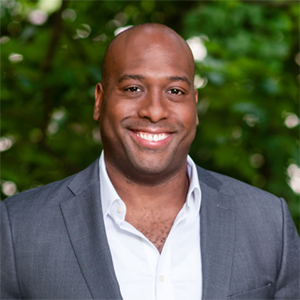 Fitzgerald Angrand is a transactional attorney specializing in debt finance and alternative investments in the cannabis industry, representing investors, private equity funds, private debt funds, family offices, distressed debt funds, lenders and operating companies.
 Matthew Levy is a Manager with PKF O’Connor Davies in the Not-for-Profit Services Group. He is a CPA and has been with PKFOD since 2012. He graduated from Lehigh University with a Bachelor of Science in Accounting. He currently serves as the treasurer of the Sustainability Investment Leadership Council.
 Heather Loebner leads Sustainability and ESG strategy at CircleIT, a B Corporation in the IT Asset Disposition (ITAD) industry. Sustainability plays a critical role at CircleIT, focused on repurposing IT devices at end-of-life and eliminating e-waste aligned with a circular economy model. Loebner leads an internal and client-facing ESG strategy that increases transparency, establishes a path to carbon neutrality and net zero, and builds social and environmental impact through strong governance aligned with B Corporate values and certification.
 J. Michael Kirkland, CPA, CGMA is a veteran financial executive with over 30 years of experience in accounting, industry, consulting, and business development. He also serves the CPA profession with distinction, lending strong and visible leadership to professional and student groups.