
Published June 13, 2024 by McAlan LC
Author: Allen Campbell, JD, MBA, Founder & Chief Executive Officer, McAlan LC

We‘ve always known this would be The Big One, and now it’s becoming reality. The CSDDD has passed the legislative hurdles. It now awaits only publication in the Official Journal of the European Union, 20 days after which it will enter into force. Member States will then have two years to transpose the Directive into national law and communicate the relevant texts to the Commission. One year later, the rules will start to apply to companies, with a gradual phase-in between three and five years after entry into force. The European Commission will issue a set of guidelines to help companies comply with the Directive.
In the words of the Commission,
“The aim of this Directive is to foster sustainable and responsible corporate behavior in companies’ operations and across their global value chains. The new rules will ensure that companies in scope identify and address adverse human rights and environmental impacts of their actions inside and outside Europe.”
Overview: This is a massive legal instrument. As stated by the Commission, here are the key aspects of the Directive:
The benefits of the new rules:
For citizens:
- More protection of human rights, notably including labor rights.
- A healthier environment to live in.
- Increased trust in businesses.
- More transparency, thus enabling informed choices.
- Better access to justice for victims.
For companies:
- Harmonized legal framework in the EU – a level playing field for companies to compete.
- Greater customer trust and employees’ commitment.
- Better awareness of companies’ negative human rights and environmental impacts, less liability risks.
- Better risk management, more resilience and increased competitiveness.
- Increased attractiveness for talent, sustainability-oriented investors and public procurers.
- Increased incentives for innovation.
- Improved access to financial resources.
For developing countries:
- Better protection of human rights and the environment.
- Sustainable investment, capacity building and support for value chain companies.
- Improved sustainability-related practices.
- Increased adoption of international standards.
- Improved living conditions for people.
Company obligations:
- “Corporate due diligence duty”: The main elements of this duty are identifying and addressing potential and actual adverse human rights and environmental impacts in a company’s own operations, in its subsidiaries, and, where related to their value chains, those of its their business partners.
- Climate change-related obligations: Large companies must adopt a transition plan for climate change mitigation aligned with the 2050 climate neutrality objective of the Paris Agreement as well as intermediate targets under the European Climate Law.
Which companies are in-scope:
- Large EU companies: Legal obligations are imposed on about 6,000 companies with over 1000 employees and over EUR 450 million turnover (net) worldwide.
- Large non–EU companies: Obligations are also imposed on about 900 companies with over EUR 450 million turnover (net) in the EU.
- Small and medium size enterprises: Micro companies and SMEs are not directly covered by the proposed rules. They will however be massively affected indirectly by virtue of being in the supply chains of in-scope companies. The Directive does provide some support and protection for them.
Estimated compliance costs:
Businesses will have to bear:
- The costs of establishing and operating due diligence procedures.
- Transition costs, including expenditures and investments to adapt a company’s own operations and value chains to comply with the due diligence obligation, if needed.
Enforcement:
The rules will be enforced through:
- Administrative supervision: Each Member State will designate an authority to supervise and enforce the rules, by means of injunctive orders and effective, proportionate and dissuasive penalties (notably fines). At the EU level, the Commission will set up a European Network of Supervisory Authorities that will bring together representatives of the national bodies to ensure a coordinated approach.
- Civil liability: Member States will ensure that victims get compensation for damages resulting from an intentional or negligent failure to carry out due diligence.
The Political Context:
Sustainability is often understood to be the same thing as ESG (the environmental, social and governance factors of a business). In less than about 30 years, sustainability/ESG has become a dynamic new force in the global business ecosystem. The CSDDD is in the tradition of ESG, but it is only focused on the “E” and “S”, and does not deal with the “G”. (The G component was in the first version of the CSDDD,
the Mandatory Due Diligence [MDD] Directive.) Does this mean, as many people have argued, that the G component is less important than the E and S components? Does it suggest that the G component will gradually run out of gas? Time will tell.
The CSDDD is on the cutting edge of sustainability. Europe has been the leader in sustainability regulation. The CSDDD is a truly progressive law, and it was the recipient of hard political bargaining. The European Commission finally adopted it on May 24th. As stated above, it mandates behaviors. It follows and is in the tradition of the recently enacted EU Corporate Sustainability Reporting Directive, which mandates reporting. Mandating reporting and behaviors can be seen as a one-two punch.
A few days ago, only weeks after the Commission acted, elections were held throughout Europe, and the results showed significant gains for hard-right and right- leaning parties. Only time will tell whether the changing political winds in Europe – or elsewhere – will impact this due diligence legal initiative.
In the meantime, here in the US, the State of California is quite progressive with respect to sustainability and has enacted three laws within the last twelve months. Like the EU’s laws, the California laws have major effects on companies that are not domiciled there.
Recommendations:
For more than two years we have been urging companies to pay attention to this legislation, to consider its ramifications for operations and supply chains, to begin re- thinking their business models and practices, and to gear up accordingly. More than ever, that is excellent advice.
Remember too that there will be opportunities for forward-thinking companies.
In effect, over the next few years, all sizable companies will find themselves affected by what I call Value Chain Sustainability laws. They will impact the global trading system. It seems likely that some collaboration will be necessary. We recommend that companies explore possible collaborative responses, possibly in cooperation with the EU and its Member States.
Previously published at https://mcalan.com/the-european-union-corporate-sustainability-due-diligence-directive/. All rights reserved by author.
 Stanley Goldstein, one of the founders of the Sustainability Investment Leadership Council, launched the accounting firm Goldstein Golub & Kessler (now part of RSM). After the firm was bought, Stanley became a private equity investor and is now the Chairman of Knickerbocker Financial Group. Mr. Goldstein has served on numerous corporate boards and is the founder of American Friends of James Joyce, The New York Hedge Alternative Investment Roundtable and Donors' Forum (a philanthropic roundtable).
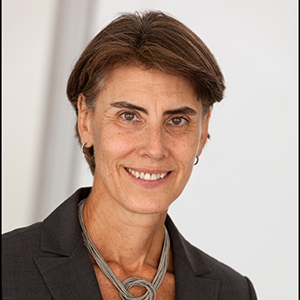 Rebecca Craft
 Andrea Schmitz
 Nidhi Chadda
 Jeffrey Yin currently serves as the Chief Financial Officer and General Counsel of Artsy (
 Sarah Tomolonius is the Vice President of Investor Relations at M13, a consumer tech-focused full-service venture capital engine. Ms. Tomolonius is the co-founder of the Sustainability Investment Leadership Council. Ms. Tomolonius served as Vice President, Marketing and Investor Relations for Arlon Group, a food and agriculture investment firm, from December 2012 to June 2018, and served as Senior Professional, Management Reporting & Analytics from December 2010 to December 2012. From October 2008 to December 2010, Ms. Tomolonius served as Associate, Investor Relations for Citi Private Equity, a private equity group that was acquired by StepStone Group in October 2010. From October 2005 to September 2007, Ms. Tomolonius served as Research Analyst, Corporate & Public Affairs Group of Edelman, a global public relations firm. Ms. Tomolonius served as Program Assistant, Water & Coastal Program of Natural Resources Defense Council, a non-profit international environmental advocacy group, from October 2002 to September 2005. Ms. Tomolonius has served as a Director on the Board of Quest Resource Holding Corp. (NASDAQ: QRHC) since 2016 and is a member of the Audit and Nominations & Governance Committees. Ms. Tomolonius also served in numerous board capacities for non-profit organizations, including Chair of the Sustainability Committee for the New York Alternative Investment Roundtable and President of the Board of HeARTs Speak, a nonprofit organization, from February 2014 to February 2017, and she remains a board member for the organization.
 Mohita Sinha serves as the Co-Chair of SILC’s Education Committee. With extensive experience leading complex finance and risk regulatory reporting transformations at global financial institutions, Mohita helps organizations evolve from voluntary action to regulatory compliance to true value creation. Her current focus is on climate risk integration, guiding companies to understand, operationalize, and embed risk considerations into business strategy while meeting compliance requirements.
 Jessica Moon, Education Co-Chair, is a strategic leader at the Sustainable Investment Leadership Council (SILC), where she champions the integration of sustainability into core business and investment strategies. She designs and leads convenings that unite leading cross-sector professionals in critical dialogues focused on unlocking sustainable financial returns through innovative solutions. With over two decades of experience, Jessica brings a unique perspective, combining her legal acumen with deep sustainability expertise and a holistic understanding of the interconnectedness of business functions. Her leadership at Scholastic Inc., where she pioneered their ESG & Sustainability function, demonstrates her ability to develop and implement strategies that drive both environmental and financial value. Jessica empowers leaders to see sustainability as a key driver of strategic advantage and long-term financial success, fostering a future where impact and returns are intrinsically linked.
 Dr. Michael Kraten is an executive management consultant and business educator. He maintains specialties in entrepreneurship, business modeling, decision analysis, sustainability and resilience, educational gaming, strategic planning, valuation, risk management, and forensic analysis.
 Sophia Shahabadi
 As a Managing Director at Silver Leaf Partners and sustainable finance subject matter expert, Marc Tannous established the Sustainable Finance Practice as a service organization to represent managers and companies seeking alpha by scaling sustainability / impact solutions. The Practice provides capital introduction, customer referral, and advisory consulting.
  Sydney Improta
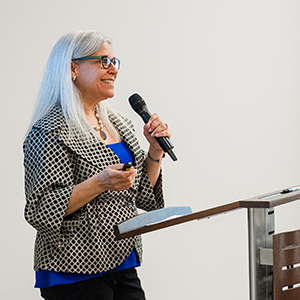 As a coach, facilitator and consultant, Deborah Goldstein works with NY, U.S. and international organizations and individuals who are motivated to thrive in the 21stcentury workplace environment.
 Jason Dodier is an American international business professional at Schneider Electric, which is the global specialist in energy management. Since commencing his career with Schneider Electric, Jason has lived in the United States, Middle East and Europe, while performing a variety of functions on behalf of the company in operations, business development, marketing and sales management. Jason is currently a Corporate Ambassador for electrical distribution, communications technology, sustainability, and innovation, activity on social media and delivering speeches on these topics worldwide.
 Fitzgerald Angrand is a transactional attorney specializing in debt finance and alternative investments in the cannabis industry, representing investors, private equity funds, private debt funds, family offices, distressed debt funds, lenders and operating companies.
 Matthew Levy is a Manager with PKF O’Connor Davies in the Not-for-Profit Services Group. He is a CPA and has been with PKFOD since 2012. He graduated from Lehigh University with a Bachelor of Science in Accounting. He currently serves as the treasurer of the Sustainability Investment Leadership Council.
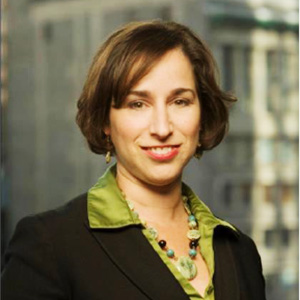 Heather Loebner leads Sustainability and ESG strategy at CircleIT, a B Corporation in the IT Asset Disposition (ITAD) industry. Sustainability plays a critical role at CircleIT, focused on repurposing IT devices at end-of-life and eliminating e-waste aligned with a circular economy model. Loebner leads an internal and client-facing ESG strategy that increases transparency, establishes a path to carbon neutrality and net zero, and builds social and environmental impact through strong governance aligned with B Corporate values and certification.
 J. Michael Kirkland, CPA, CGMA is a veteran financial executive with over 30 years of experience in accounting, industry, consulting, and business development. He also serves the CPA profession with distinction, lending strong and visible leadership to professional and student groups.