
Completed: April 23, 2024
Author: Mark Doan, Junior Year Student, St. John’s School, Houston, Texas

The costs and risks of reporting on labor information disincentivize many companies from issuing reports. However, companies should focus less on the costs and more on the benefits and increasing need for reporting. Ultimately, the modern demands for information make reporting a crucial lifeline and an invaluable opportunity for companies that wish to both stay in the competition and bolster their reputations.
The business costs of acquiring information about labor conditions and the potential legal risks of releasing such information discourage many companies from issuing reports.
When seeking to collect labor information, many companies hire sustainability auditors to inspect their facilities and those of their suppliers. (See End Note 1) Companies often also purchase or develop data analytics software to observe overall trends in their workplaces such as employee satisfaction, working hours, and wages. (See End Note 2) Companies, regardless of the methods they employ, are ultimately required to set aside money and resources to gather this information. Furthermore, the time dedicated by staff members to reporting takes away from time that could be spent conducting more immediately profitable operations. As corporate reporting remains optional in many countries, companies are discouraged from incurring further costs when the benefits of publicizing their information also remain unclear. (See End Note 3) Companies willing to dedicate resources to analyzing their operations face the secondary challenge of dealing with information that could hurt them if publicized. If the data suggests labor conditions that do not align with standards set by major organizations such as the International Labor Organization, SASB, GRI, and the United Nations, informed consumers will likely reduce demand for the company’s goods and services. (See End Note 4) In addition, poor results may bring about legal cases against the companies, harming their reputation and magnifying costs. Further legal risks may also emerge if companies attempt to falsify or cover up original information in their reports. In an attempt to avoid potentially costly business and legal risks, many companies will withhold information entirely. Thus as the benefits of reporting are unclear for many companies and the costs to business, reputation, and further legal risks are present, companies are not sufficiently convinced about reporting on their labor conditions.
Companies, however, should feel pressured into releasing labor information as significant benefits exist. Corporate reporting conveys to consumers and stakeholders an attentiveness to detail as companies are comprehensively articulating labor conditions across their supply chains. By dedicating resources to investigating and reporting on the well-being, safety, and fair compensation of their employees, companies demonstrate an awareness of the impacts of their industry and goods or services. Reporting further educates companies about the sustainability and efficiency of their operations. For example, reporting can prompt companies to identify and replace lagging machinery and equipment consequently boosting production efficiency and worker safety. Additionally, reporting can help companies improve their workplace governance and dynamics by providing employees with opportunities to voice their concerns through feedback systems such as interviews and surveys. Furthermore, companies through reporting create opportunities for themselves to strengthen their regulatory compliance and minimize the chance of future catastrophes. (See End Note 5)
Ultimately, in this age of information where content is highly accessible and demanded, the costs to companies of not reporting on labor conditions outweigh the costs of getting started. Primarily, companies are at risk of falling behind in the evolving marketplace if they withhold information from the public about their labor sustainability. The urgency of sustainability has grown significantly, especially among younger generations, and is influencing consumers’ decisions. (See End Note 6) Failing to make demanded information accessible to these consumers, especially as other companies are beginning or have been doing so, isolates companies from the main competition and will gravely detriment business activity in the coming years. Furthermore, due to the informational age, the opportunities presented by reporting on labor sustainability are growing in scale and the refusal to seize them will severely stunt companies’ progress. Companies that employ web marketing methods such as social media promotions and website advertising expand their online following. By making information about the quality of their labor conditions available to young, receptive audiences, companies are presented with significant opportunities to improve their credibility and attract more business. Additionally, as news headlines and updates circulate more quickly today, companies are increasingly at risk of being called out for various labor violations. In their reports of labor conditions, though, companies can proactively inform public audiences of the measures they have taken to address various concerns before it is too late to defend themselves. Thus, companies should report on labor conditions as they will benefit significantly and because the modern age of information demands it from them.
In this highly competitive marketplace, the costs and risks of reporting on labor conditions are intimidating to companies and appear as if they are not worth incurring. However, companies must be aware that significant benefits are available to them if they make such information accessible to modern, interested audiences. Even further, the easy access and consequent high demand for information has made reporting on labor sustainability both a growing benefit and a necessity for today’s companies.
Sidebar: The Turnaround of Sime Darby Plantation
On December 30, 2020, the United States Customs and Border Patrol issued a withhold release order on palm oil and its derivative products produced by Sime Darby Plantation Berhad in Malaysia based on information that the company was employing forced labor along the production process of its goods. According to the CBP’s investigation, Sime Darby Plantation was exploiting the labor of their foreign, migrant workers through the harvesting of fresh fruit bunches that were used to make palm oil. Over the three months provided to them by the U.S CBP to eliminate forced labor practices and sufficiently demonstrate a stance against coercive labor, Sime Darby Plantation hired an ethical trade consultancy to audit and investigate its premises and working conditions. Following its investigation, the company released this information to the United States government and its consumers in its latest sustainability report. Furthermore, the company designated twenty million dollars to repay the fifteen to nineteen thousand active and former migrant workers who were trapped in debt bondage. Ultimately, on February 1, 2023, the CBP lifted its two-year import ban on Sime Darby Plantation’s palm oil products, allowing for formal trade with the company to resume.
The withhold release order placed on Sime Darby Plantation due to suspicions of labor rights violations emphasizes the significance of a company’s labor practices. As demonstrated in the case of SDP, a failure to recognize signs of labor rights violations can isolate a company from consumers. Fortunately, for SDP, as a result of its leaders’ initiative to rid forced labor from their operations, transparency of information, and pronounced commitment to sustainability, the company rescued itself from complete failure and maintained its position in the global marketplace. However, to avoid the risks of incurring costs such as reputational damage and profit losses, companies should get ahead of the game by being transparent with their consumers about labor conditions and being aware of the status of their operations from the start.
End Notes
- “What is a Sustainability Audit?,” ESGTheReport, Published November 15, 2021. https://esgthereport.com/what-is-a-sustainability-audit/. (The three main types of sustainability or ESG audits are external/third-party audits, internal audits, and self- evaluation audits. Companies through audits are informed about their sustainability and profitability, more prepared when stakeholders question their sustainability, and more aware of potential areas for improvement.)
- “What Is Sustainability Data Management and Reporting Software?” Published September 29, 2022. https://novisto.com/what-is-sustainability-data-management- and-reporting-software/. (Companies turn to sustainability data management and reporting software to overcome challenges such as complex data gathering, changing reporting frameworks and requests, uncertainty with quality of data, and difficulties in analyzing ESG risks and opportunities. Acquiring and renewing such up-to-date and efficient software, while it improves data collection efficiency, can be financially intimidating for emerging companies.)
- Michael Kapoor. “European Businesses Poised to Lead Global ESG Reporting Rollout.” Bloomberg Law, December 27, 2023, https://news.bloomberglaw.com/esg/european-businesses-poised-to-lead-global-esg- reporting-rollout.; “At Least 10,000 Foreign Companies to Be Hit by EU Sustainability Rules.” Wall Street Journal, Published April 5, 2023. https://www.wsj.com/articles/at- least-10-000-foreign-companies-to-be-hit-by-eu-sustainability-rules-307a1406. (The European Union, via its Corporate Sustainability Reporting Directive (CSRD), requires at least 50,000 European companies to report on their ESG matters and around 10,000 non- European companies, of which a third are in the United States, to do the same. Only Brazil has announced plans for its companies to meet International Sustainability Standards Board (ISSB) standards and the UK, Australia, and Japan have considered incorporating such standards into their regulatory frameworks, however, no other nations have explicitly committed.)
- Anne Field, “Conscious Consumer Spending Could Be At A Tipping Point.” Forbes, November 30, 2023, https://www.forbes.com/sites/annefield/2023/11/30/conscious- consumer-spending-could-be-at-a-tipping-point/?sh=7fe5139421ad.; Kim McCann, “Conscious Consumerism is Transforming Industries.” The Consumer Goods Forum, October 4, 2021, https://www.theconsumergoodsforum.com/blog/ 2021/10/04/conscious-consumerism-is-transforming-industries/. (Sustainability- minded or socially-conscious consumerism describes the modern consumer’s appetite for sustainable business practices, goods, and services and has been growing vastly over the past decade largely on account of peoples’ knowledge about the state of the world and access to company information. In 2023, the socially responsible marketing consultancy Good.Must.Grow reported a Conscious Consumer Spending Index value of 57, its highest value in the past three years.)
- Gokul Shekar, “The 9 benefits of ESG reporting for modern businesses.” illuminem, Published August 31, 2023.https://illuminem.com/illuminemvoices/the-9-benefits-of- esg-reporting-for-modern-businesses.; Barbara Strozzilaan, “The value of sustainability reporting and the GRI Standards.” Global Reporting Institute, https:// www.globalreporting.org/media/jzylu3ek/the-value-of-sustainability-reporting-and-the- gri-standards.pdf. (The most commonly cited benefits of sustainability reporting to companies include enhancing business activity through investor attraction, reputation strengthening, increased cost efficiency, awareness of innovation opportunities, and employee and developing stakeholder trust. Reporting also has more long-term benefits such as anticipating down-the-line disruptions, goal setting, and laying down the framework for a company’s sustainability-focused strategy and activity.)
- Anne Field, “Conscious Consumer Spending Could Be At A Tipping Point.” Forbes, November 30, 2023, https://www.forbes.com/sites/annefield/2023/11/30/conscious- consumer-spending-could-be-at-a-tipping-point/?sh=7fe5139421ad.; Kim McCann, “Conscious Consumerism is Transforming Industries.” The Consumer Goods Forum, October 4, 2021, https://www.theconsumergoodsforum.com/blog/ 2021/10/04conscious-consumerism-is-transforming-industries/.
Suggested Additional Readings
Ananthalakshmi, Anantha, Latiff, Rozanna, “U.S. lifts import ban on Sime Darby Plantation products” Reuters, February 3, 2023, https://www.reuters.com/business/sustainable-business/us-says-sime-darby-plantation-products-no-longer-produced- with-forced-labour-2023-02-03/
Bar Am, Jordan Bar Am, Doshi, Vinit, Frey, Sherry, Malik, Anandi, Noble, Steve. “Consumers care about sustainability—and back it up with their wallets.” McKinsey & Company, February 6, 2023. https://www.mckinsey.com/industries/consumer-packaged-goods/our-insights/consumers-care-about-sustainability-and-back-it-up-with-their-wallets#/.
Christensen, Hans B. Leuz, Christian, “Should Sustainability Disclosures Be Standardized?” Chicago Booth Review, November 27, 2019, https://www.chicagobooth.edu/review/should-sustainability-disclosures-be-standardized.
Congressional Research Service. “Section 307 and Imports Produced by Forced Labor.”Last updated October 25, 2023. https://crsreports.congress.gov/product/pdf/IF/IF11360.
ESGTheReport. “What is a Sustainability Audit?” Published November 15, 2021. https://esgthereport.com/what-is-a-sustainability-audit/.
Faure, Juliette, “Forced Labour: Does it Make Economic Sense?” UNU/SIPA Junior Research Fellowship Paper Series, no. 1 (October 2015): 1–15, https://collections.unu.edu/eserv/UNU:3293/JRF01_ForcedLabour.pdf.
Field, Anne, “Conscious Consumer Spending Could Be At A Tipping Point.” Forbes, November 30, 2023, https://www.forbes.com/sites/annefield/2023/11/30/conscious-consumer-spending-could-be-at-a-tipping-point/?sh=7fe5139421ad.
GEP. “How to Conduct Supply Chain Due Diligence.” Accessed February 20, 2024. https://www.gep.com/blog/strategy/how-to-conduct-supply-chain-due-diligence#:~:text=Supply%20chain%20due%20diligence%20is%20a%20form%20of%20corporate%20social,issues%20in%20the%20supply%20chain.
Holger, Dieter, “At Least 10,000 Foreign Companies to Be Hit by EU Sustainability Rules.” Wall Street Journal, Published April 5, 2023. https://www.wsj.com/articles/at-least-10-000-foreign-companies-to-be-hit-by-eu-sustainability-rules-307a1406.
Kapoor, Michael. “European Businesses Poised to Lead Global ESG Reporting Rollout.” Bloomberg Law, December 27, 2023. https://news.bloomberglaw.com/esg/european-businesses-poised-to-lead-global-esg-reporting-rollout.
Kolb, Melina. “What Is Globalization?: And How Has the Global Economy Shaped the United States?.” Peterson Institute for National Economics, October 24, 2022. https://www.piie.com/microsites/globalization/what-is-globalization.
Market Business News. “Sustainability Reporting: What is the Cost?.” Published May 31, 2021. https://marketbusinessnews.com/sustainability-reporting-what-is-the-cost/266920/.
McCann, Kim, “Conscious Consumerism is Transforming Industries.” The Consumer Goods Forum, October 4, 2021, https://www.theconsumergoodsforum.com/blog/2021/10/04/conscious-consumerism-is-transforming-industries/.
National Geographic, “Effects of Economic Globalization.” Published October 19, 2023. https://education.nationalgeographic.org/resource/effects-economic-globalization/.
Novisto, “What Is Sustainability Data Management and Reporting Software?” Published September 29, 2022. https://novisto.com/what-is-sustainability-data-management-and-reporting-software/.
Reuters, “U.S. says sufficient evidence of forced labour at Malaysia’s Sime Darby Plantation,” Published January 28, 2022, https://www.reuters.com/world/asia-pacific/us-says-sufficient-evidence-forced-labour-malaysias-sime-darby-plantation-2022-01-28/.
Shekar, Gokul. “The 9 benefits of ESG reporting for modern businesses.” illuminem. Published August 31, 2023. https://illuminem.com/illuminemvoices/the-9-benefits-of-esg-reporting-for-modern-businesses.
Strozzilaan, Barbara. “The value of sustainability reporting and the GRI Standards.” Global Reporting Institute. https://www.globalreporting.org/media/jzylu3ek/the-value-of-sustainability-reporting-and-the-gri-standards.pdf.
 Stanley Goldstein, one of the founders of the Sustainability Investment Leadership Council, launched the accounting firm Goldstein Golub & Kessler (now part of RSM). After the firm was bought, Stanley became a private equity investor and is now the Chairman of Knickerbocker Financial Group. Mr. Goldstein has served on numerous corporate boards and is the founder of American Friends of James Joyce, The New York Hedge Alternative Investment Roundtable and Donors' Forum (a philanthropic roundtable).
 Rebecca Craft
 Andrea Schmitz
 Nidhi Chadda
 Jeffrey Yin currently serves as the Chief Financial Officer and General Counsel of Artsy (
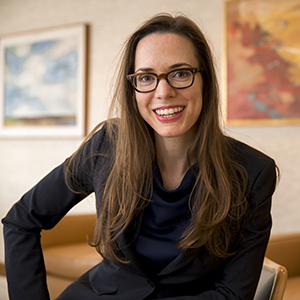 Sarah Tomolonius is the Vice President of Investor Relations at M13, a consumer tech-focused full-service venture capital engine. Ms. Tomolonius is the co-founder of the Sustainability Investment Leadership Council. Ms. Tomolonius served as Vice President, Marketing and Investor Relations for Arlon Group, a food and agriculture investment firm, from December 2012 to June 2018, and served as Senior Professional, Management Reporting & Analytics from December 2010 to December 2012. From October 2008 to December 2010, Ms. Tomolonius served as Associate, Investor Relations for Citi Private Equity, a private equity group that was acquired by StepStone Group in October 2010. From October 2005 to September 2007, Ms. Tomolonius served as Research Analyst, Corporate & Public Affairs Group of Edelman, a global public relations firm. Ms. Tomolonius served as Program Assistant, Water & Coastal Program of Natural Resources Defense Council, a non-profit international environmental advocacy group, from October 2002 to September 2005. Ms. Tomolonius has served as a Director on the Board of Quest Resource Holding Corp. (NASDAQ: QRHC) since 2016 and is a member of the Audit and Nominations & Governance Committees. Ms. Tomolonius also served in numerous board capacities for non-profit organizations, including Chair of the Sustainability Committee for the New York Alternative Investment Roundtable and President of the Board of HeARTs Speak, a nonprofit organization, from February 2014 to February 2017, and she remains a board member for the organization.
 Mohita Sinha serves as the Co-Chair of SILC’s Education Committee. With extensive experience leading complex finance and risk regulatory reporting transformations at global financial institutions, Mohita helps organizations evolve from voluntary action to regulatory compliance to true value creation. Her current focus is on climate risk integration, guiding companies to understand, operationalize, and embed risk considerations into business strategy while meeting compliance requirements.
 Jessica Moon, Education Co-Chair, is a strategic leader at the Sustainable Investment Leadership Council (SILC), where she champions the integration of sustainability into core business and investment strategies. She designs and leads convenings that unite leading cross-sector professionals in critical dialogues focused on unlocking sustainable financial returns through innovative solutions. With over two decades of experience, Jessica brings a unique perspective, combining her legal acumen with deep sustainability expertise and a holistic understanding of the interconnectedness of business functions. Her leadership at Scholastic Inc., where she pioneered their ESG & Sustainability function, demonstrates her ability to develop and implement strategies that drive both environmental and financial value. Jessica empowers leaders to see sustainability as a key driver of strategic advantage and long-term financial success, fostering a future where impact and returns are intrinsically linked.
 Dr. Michael Kraten is an executive management consultant and business educator. He maintains specialties in entrepreneurship, business modeling, decision analysis, sustainability and resilience, educational gaming, strategic planning, valuation, risk management, and forensic analysis.
 Sophia Shahabadi
 As a Managing Director at Silver Leaf Partners and sustainable finance subject matter expert, Marc Tannous established the Sustainable Finance Practice as a service organization to represent managers and companies seeking alpha by scaling sustainability / impact solutions. The Practice provides capital introduction, customer referral, and advisory consulting.
  Sydney Improta
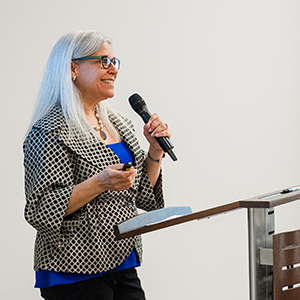 As a coach, facilitator and consultant, Deborah Goldstein works with NY, U.S. and international organizations and individuals who are motivated to thrive in the 21stcentury workplace environment.
 Jason Dodier is an American international business professional at Schneider Electric, which is the global specialist in energy management. Since commencing his career with Schneider Electric, Jason has lived in the United States, Middle East and Europe, while performing a variety of functions on behalf of the company in operations, business development, marketing and sales management. Jason is currently a Corporate Ambassador for electrical distribution, communications technology, sustainability, and innovation, activity on social media and delivering speeches on these topics worldwide.
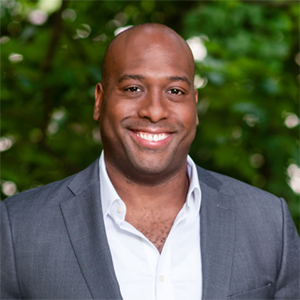 Fitzgerald Angrand is a transactional attorney specializing in debt finance and alternative investments in the cannabis industry, representing investors, private equity funds, private debt funds, family offices, distressed debt funds, lenders and operating companies.
 Matthew Levy is a Manager with PKF O’Connor Davies in the Not-for-Profit Services Group. He is a CPA and has been with PKFOD since 2012. He graduated from Lehigh University with a Bachelor of Science in Accounting. He currently serves as the treasurer of the Sustainability Investment Leadership Council.
 Heather Loebner leads Sustainability and ESG strategy at CircleIT, a B Corporation in the IT Asset Disposition (ITAD) industry. Sustainability plays a critical role at CircleIT, focused on repurposing IT devices at end-of-life and eliminating e-waste aligned with a circular economy model. Loebner leads an internal and client-facing ESG strategy that increases transparency, establishes a path to carbon neutrality and net zero, and builds social and environmental impact through strong governance aligned with B Corporate values and certification.
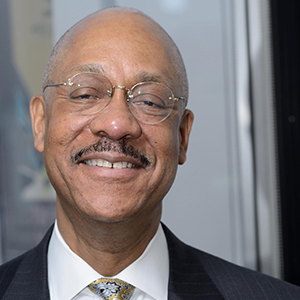 J. Michael Kirkland, CPA, CGMA is a veteran financial executive with over 30 years of experience in accounting, industry, consulting, and business development. He also serves the CPA profession with distinction, lending strong and visible leadership to professional and student groups.